Sunday, January 24, 2016

Unit 6 Reflection

This unit was about the technologies in biology and their different applications in everyday life. Biotechnology is the study of the manipulation of living things and how they are changed in order to benefit mankind. The four applications of biotechnology are: industrial and environmental; agricultural; medical; and diagnostic research. Despite the many benefits that these four applications have given to mankind, there are many questions that are posed about the bioethics of gene manipulation and weather they fit our values and morals as a species. This part of biotechnology is important since scientists are constantly creating organisms and making different discoveries, but weather the applications of these discoveries the moral thing is something that must always be asked in science that changes the natural order of things. We also learned about recombinant genes, and how they are used to mass produce and create bacteria with a desired protein to be extracted. This involves extracting a gene using a restriction enzymes, inserting it into a plasmid, and mass producing the plasmid in order to create and extract the protein that is created from the gene. The three main technologies used in biotech are Polymerase Chain Reactions (PCR), Gel Electrophoresis, and DNA Sequencing. The process of PCR is to denature strands of DNA with heat, add a primer to specific DNA sequences, and to use DNA polymerase to read the DNA and mass produce it, creating multiple copies for analysis. Gel electrophoresis is when DNA is placed into a gel and ran through with a an electrical current, which separates the DNA by size and allows for them to be more easily analyzed. DNA sequencing is used to determine the exact sequence of a gene and uses DNA polymerase and dyes to allow a computer to read it and analyze it. This was a fast paced unit and I had a hard time understanding some of the concepts until we did the labs, which gave us hands on experience and allowed us to truly see how the technologies are used and their  applications in real life.

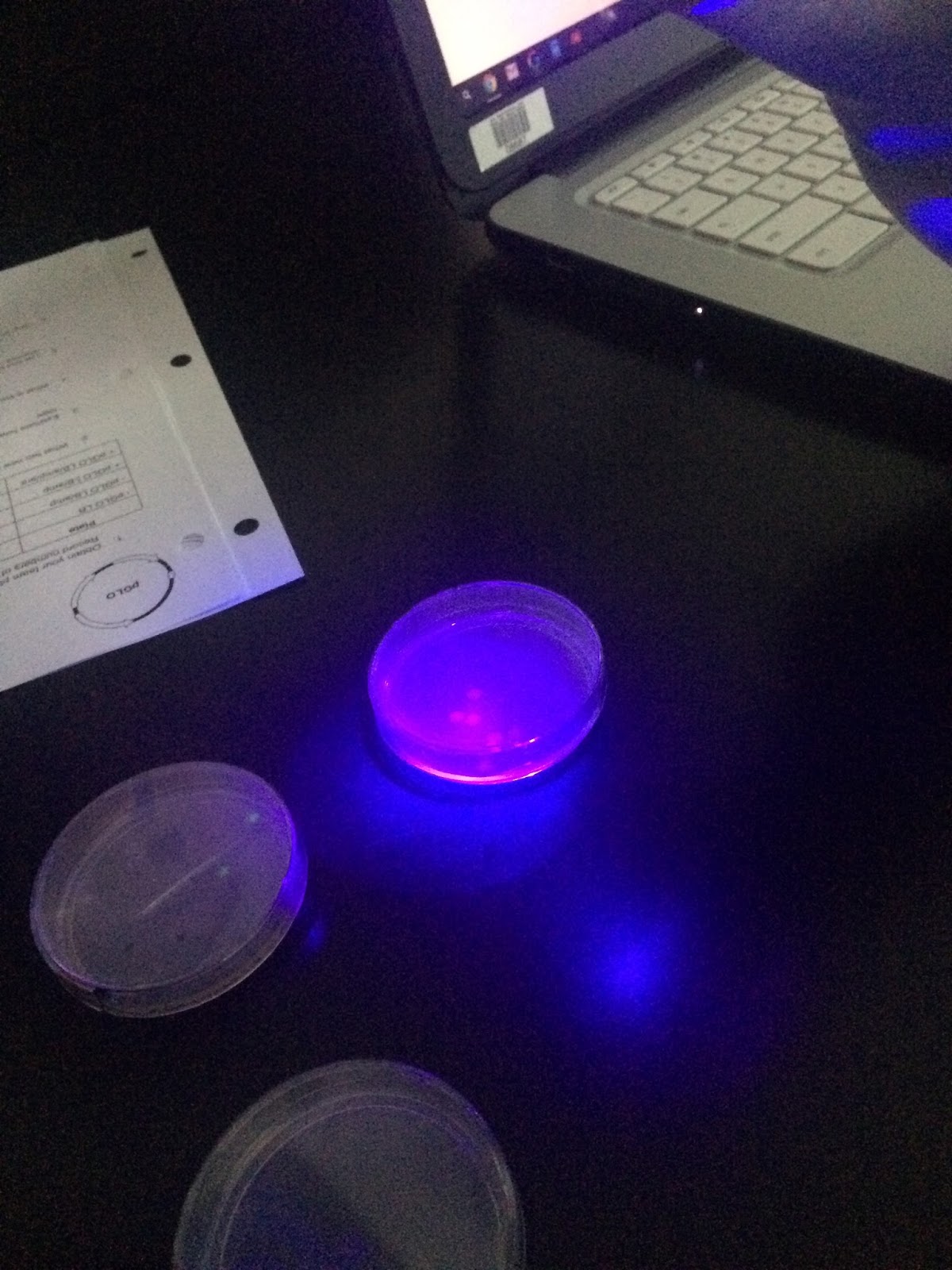
We did three labs in this unit which all helped me understand the concepts behind the different technologies. In the Recombinant DNA lab, we used paper models to help us understand the role of restriction enzymes and how they cut plasmids and DNA to allow them to combine together. In the Candy Electrophoresis Lab, we ran different dyes in candy through a gel electrophoresis and analyzed them next to sample dyes, which helped us understand how gel electrophoresis is used and how it separates DNA by size.  In the pGLO Lab, we did the replication and combing part of Recombinant DNA, by combining DNA and plasmids through a process of cooling and heating and then mass producing the plasmids inside of bacteria to see how they are actually created and combined.

Links to Labs:


I want to learn more about the industrial applications of biotechnology, since we learned about the diagnostic and medical applications through the pGLO lab and how that technology can be used to mass produce insulin and other medicines and how gel electrophoresis can be used to study DNA, but not about how biotechnology can be used in the industrial setting.

My goals from the New Years were to gain a 4.0 GPA in the second semester and to final in at least one speech and debate tournament by the end of the second year. I have yet to complete the first goal, but am making good progress towards the goal. The second goal is also incomplete but I have come very close in many tournaments, I need to continue practicing and become more knowledgeable on the analysis of current events in order to complete this goal and achieve future success.

Recombinant DNA Lab 

Gel Electrophoresis Lab 

pGLO Lab

Friday, January 22, 2016

pGLO Lab Analysis

pGLO Observations , Data Recording & Analysis
1.
Obtain your team plates.  Observe your set of  “+pGLO” plates under room light and with UV light.  Record numbers of colonies and color of colonies. Fill in the table below.

Plate
Number of Colonies
Color of colonies under room light
Color of colonies under   UV light
- pGLO LB
Lawn
White
None
- pGLO LB/amp
0


+ pGLO LB/amp
6
White
Purple White
+ pGLO LB/amp/ara
2 and Satellite Colonies
White
Green White


2.
What two new traits do your transformed bacteria have?
The two traits that the transformed bacteria have are resistance to the antibiotic ampicillin, and the inclusion of the GFP gene in the bacteria.


3.
Estimate how many bacteria were in the 100 uL of bacteria that you spread on each plate. Explain your logic.

We estimate that there were around 5000 - 10000 bacteria since their were about 15 bacteria colonies in every unit, and those have a multitude of bacteria, and because many bacteria died due to the ampicillin, there are approximately that many bacteria at the beginning of the lab.
4.
What is the role of arabinose in the plates?


The arabinose is a promoter for the GFP gene, and it is needed in order for the RNA polymercase to be allowed to read the GFP gene and express it.


5.
List and briefly explain three current uses for GFP (green fluorescent protein) in research or applied science.
  1. It is used in many animals alongside another resistance gene to test whether it has actually entered the organism and is active inside of it.
  2. It can be used to track organisms since they glow under UV lights and can properly be used to check where they are in a contained environment.
  3. It is used in monkeys to track the entrance of diseases into the monkeys brains can better help these diseases be studied.


6.
Give an example of another application of genetic engineering.
Another example of genetic engineering is the introduction of pest resistant genes into plants in order for them to better grow in impoverished areas and to yield better crop results.


Thursday, January 21, 2016

Candy Electrophoresis Lab Analysis

All the dyes that were found matched up with  reference dyes in color, size, and area in the gel except for the green dye, which split in 2 and had a blue band and a yellow band. This is probably because the color green is created from a combination of those colors. and the mixture was split during the electrophoresis. 

The citrus red 2 dye is most similar to the dyes in the lab, specifically red 40, because it has the relatively same structure and size un like the other dyes, which are oddly shaped. Due to the similarities between these dyes, they would probably move at the same rate and to the same area in the gel.

Dog food companies probably put different color dyes in their foods because it might make the food seem more appetizing and the color may attract dogs towards it. Also, the color may give it the artificial look of meat and can make it look better compared to an all natural look.

The reason people might prefer artificial dyes over natural dyes is because artificial dyes can come in a larger variety and are cheeper to create and process, while natural dyes must be obtained from a natural source and may not have the desired quality or color.

The forces that control the distance tin which the dyes migrate are the size of the pieces of DNA along with the structure of the dye. These two control the distance because if the piece is smaller, then it travels farther and the structure may cause it to be larger or smaller.

The force of the electricity running through the gel moves the dye, which moves them from a negatively charged side to a positively charged size.

The movement caused by the charge distribution allows the DNA to move in little holes in the gel, thus splitting them by size since the smaller particles take less time to move than the larger ones. 

The DNA molecules with those weights will separate through the holes, but some will just take longer to migrate. In order of farthest to closest from the starting point it would be: 600, 1000, 2000, with 5000 lagging far behind.

Wednesday, January 13, 2016

Recombinant DNA Lab Analysis

In thus lab, we simulated the process of producing recombinant DNA and how enzymes are used to cut plasmids and genes. In this lab, we tested a multitude of enzymes to see weather they would cut twice in an insuling gene, and once in a the plasmid bacteria. The bacteria was resistant to the antibiotic kanamycin, so I would put the bacteria in kanamycin since the bacteria that had insulin also were resistant to kanamycin, so they could survive and you can mass produce them. I would not use the antibiotics tetracycline and amplicillin since they would kill all the bacteria and the ones with insulin would not survive. Restriction enzymes are enzymes that are able to cut out parts out of DNA. The one we used was Eco R1 since it cut the the human gene in two places close to the insulin gene and cut the plasmid in only one l place. If the restriction enzyme cut the bacteria in more than one place, then the lygase would not know where to attach the insulin gene to. This technology can be important in everyday lives since it can create products that people are unable to produce and provide them with a mass production of cures to diseases they may have. A real life example of recombinant DNA is that scientists have been able to produce plants that are resistant to freezing temperatures and to pesticides.

Monday, January 4, 2016

New Years Goals

For this year I will get an overall 4.0 GPA in all my classes, and will final in at least 1 speech and debate tournament before the end of the second semester. In order to gain a a 4.0 GPA, I will: study for my tests at least 1 week in advance, turn in all my homework assignments, and finish all lab reports in class (if possible). In order to final in at least 1 speech and debate tournament, which is one of my personal goals, I will: give 4 speeches a day, file articles every week, and read articles daily.

Wednesday, December 9, 2015

Unit 5 Reflection

The theme of Unit 5 was DNA and how it affects our daily lives. It went over concepts such as what DNA is, how it is replicated, how DNA is used to create proteins, as well as how genes are regulated and expressed in cells. The main understanding of this unit was to understand how DNA affects and controls our whole lives. This unit taught us how to look at the big picture of DNA and not simply what it is, but how it in fact affects our whole bodies and how are genes are expressed to create organisms. My main strength in this unit was my understanding of how DNA is used to create. Through the process of protein synthesis, in which the DNA is transcribed to RNA and then translated to proteins, DNA is changed into proteins which act as the phenotype and expression of genes. The enzyme RNA polymerase reads the DNA split strand and changes the base thymine with uracil, create a single RNA strand. The ribosome then reads the RNA strand and reads it one codon at time (pairs of 3 bases which code for a specific acid) and creates the protein. The protein synthesis lab gave a visual representation of the process which helped me to understand it and allowed me to experiment with mutations and how they affect genes. One concept I had a hard time understanding was how genes are regulated and expressed due to the complexity of the concept and how it is intertwined with protein synthesis. The diagram during the Lac opperon do now gave me a greater explanation because it provided a properly labeled visual diagram which incorporated all the vocab from this concept. My notes during the vodcast were sub par which really hurt my understanding.

https://en.wikipedia.org/wiki/Protein_biosynthesis#/media/File:Ribosome_mRNA_translation_en.svg

I learned that it is important to look into the deeper meaning of things and their effect rather then just taking them for face value. This was seen with DNA, as I learned about the actual effects of DNA rather than just accepting that there is something called DNA. I also learned that you should be willing to ask for help, as I asked my brother to help me with the concept of protein synthesis since he has taken biology before and is a biochemistry major.

http://biosocialmethods.isr.umich.edu/wp-content/uploads/2014/09/central-dogma-enhanced.png

From the Vark questionnaire I learned that I am mainly a visual and reading/writing learner, which is why I have started to learn more by using notes and drawing diagrams which give me a visual representation of certain concepts. I wonder how organisms were first able to create protein and other molecules when they first evolved since they had to first create certain organelles with out these processes. I feel that I am a better student today since I truly understand DNA and how it effects organisms, rather than in 7th grade biology where I new what DNA was but what is was and how it was different than RNA.

Tuesday, December 8, 2015

Protein Synthesis Lab Analysis


-       The process of protein synthesis changes DNA into RNA, and then into proteins. The steps of this include transcription and translation. During transcription, RNA polymerase binds to the DNA and separates the DNA strands. RNA polymerase then uses one strand of DNA to as a template and attaches the corresponding nucleotide to create the strand of RNA. The base thymine is switched with the base uracil. The new RNA strand then travels from the nucleus to the ribosome. In translation, the ribosome reads the codons (pairs of 3 bases) to create a specific amino acid, which is then attached to a long string to create a protein.


     Changes in the base pairs of DNA molecules can have a major effect depending on the type of mutation that occurs and where in the DNA sequence it occurs. The 2 types of mutations are point mutations and frameshift mutations. Point mutations can be harmless and may only change one codon, though the amino acid coded is still the same. Frameshift mutations can drastically alter the DNA sequence and change the proteins created. The insertion and deletion of bases change all of the codons after the change and greatly affects which amino acids the codons code for due to them all being changed. A frameshift mutations earlier in the sequence is the most harmful as it has the most codons to change.

    
    The mutation that we chose for our was a deletion of a base near the beginning of the sequence. We chose this mutation since it was a frameshift mutation and we believed that it would cause the most damage. Compared to other mutations, this one changed the most base codons and changed the most amino acids, creating different ones and getting rid of the stop codon. It matters where the mutation occurs because earlier mutations change all the ones behind them and have a greater effect.

    One real life mutation that occurs in human organisms is sickle cell anemia, which is the result of point mutation in one of the nucleotides for the protein of hemoglobin. The mutation causes the red blood cells to distort and form clots, greatly endangering the body.