Thursday, May 5, 2016

Unit 9 Reflection

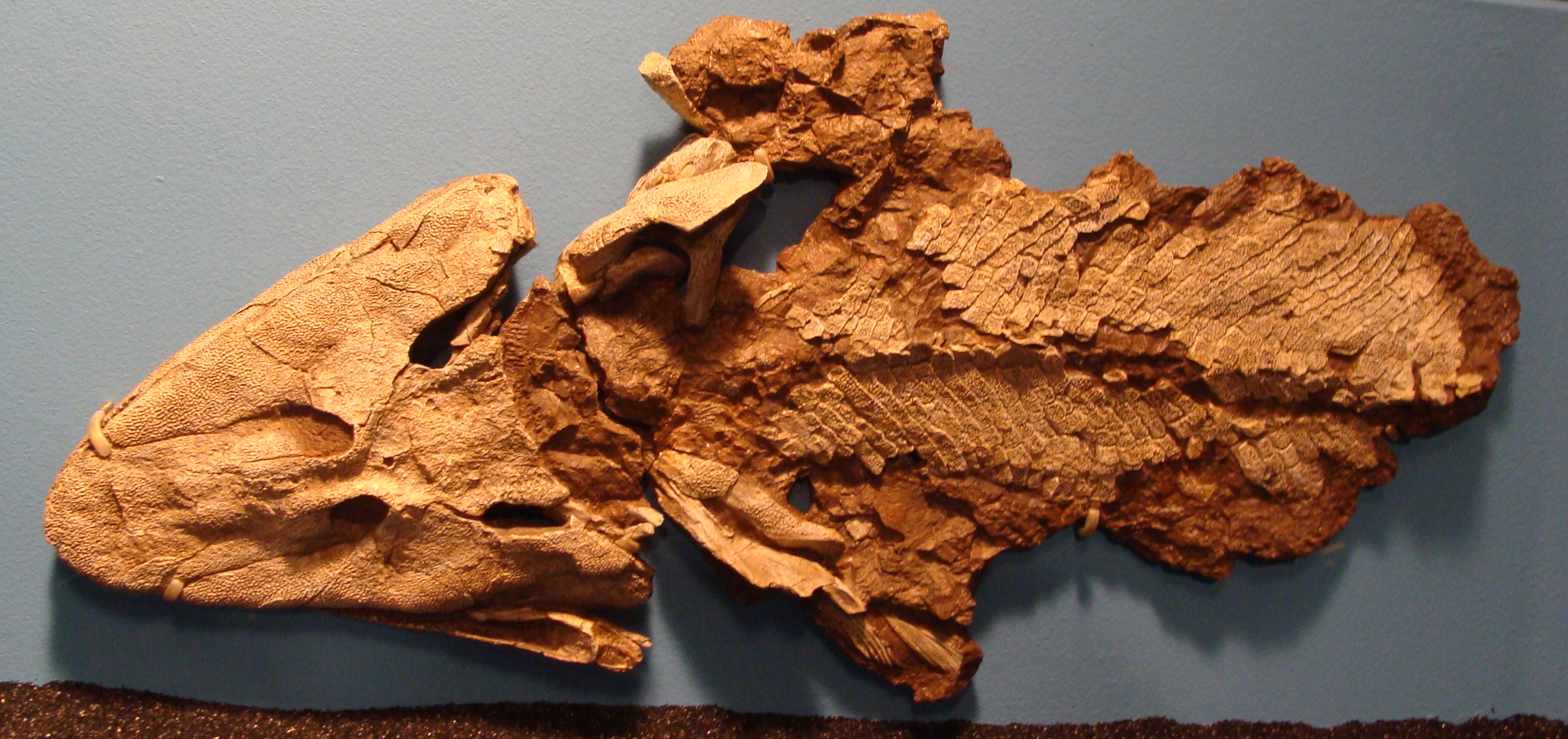
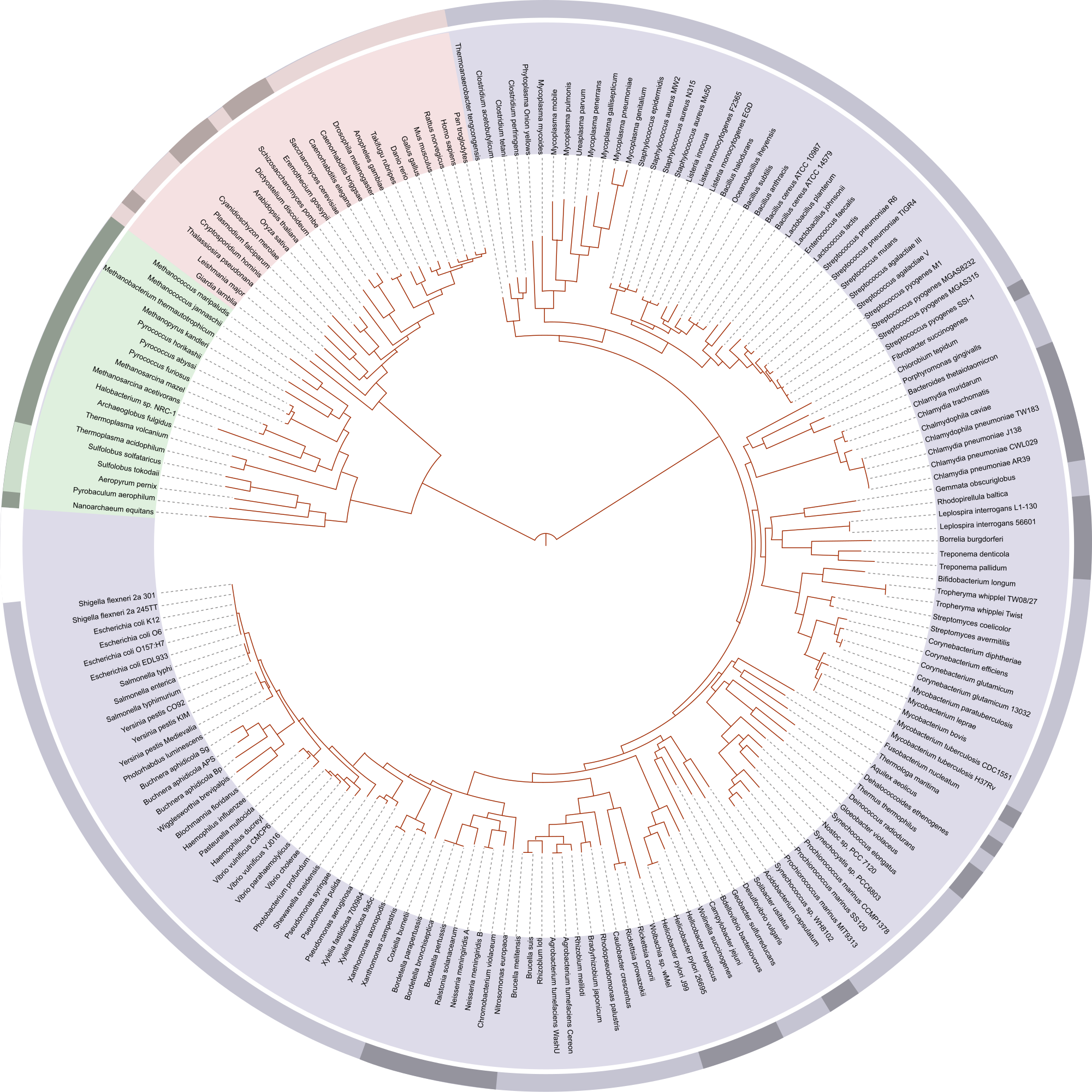
     This unit was about organisms and how they are classified into evolutionary relationships. Organisms are classified based on their similarities and are named through the study of taxonomy. The largest taxonomic level is the domain, which consist of eukarya, archaea, and bacteria. Archaea live in the most extreme of environments and look very similar to bacteria, but are genetically unique.  The kningdoms under Eukarya are the Animals, fungi, protista, and plantae. Their are many phylums under the kingdoms within eukarya, but they all fall under invertebrates or chordates. This refers to weather an organism has a backbone or not. We also learned about transitional organisms through the documentary our "Inner Fish". Transitional organisms such as Tiktaalik and Archeopteryx show how we have evolved over time and the evolutionary changes that have stayed with in our most recent days. All organisms can be shown to connect in a phylogenetic tree, which shows our evolution over time and the different nodes at which we interconnect.


   One of the major projects done in the unit was the What on Earth Evolved project, I did my project on the yeast, and it helped me learn a lot about not just organism interdependence, but also to make a presentation and publicly speak. I had to research information about my organism but had not guidelines as to the critical information or how to present it, so this project forced to become independent and judge for myself what is important and what is not. Having created presentation in previous classes, I knew that it was important to only place the critical content on the board and to speak the rest of it since the audience will lose interest otherwise and will be waiting for the next slide. Using this tactic also forced me to memorize my content and truly understand my organism instead of reading of the slides and being an un-engaging speaker. This experience will help me in my TED talk since I will mainly be speaking and there will be few supplementary slides for the audience. It will teach me to be engaging and to understand my content rather than read from slides.


Blog Posts From This Unit:

Tuesday, May 3, 2016

Your Inner Fish Reflection

     For the past week we have watched the documentary "Your Inner Fish" starring Neil Shubin and it went over our inner fish and reptile and how many of our characteristics evolved from them and the physical characteristics which we adapted to own. This series not only taught me about the evolution of man kind but provided insight into my own biology and how fit into the grand scheme of earths history.

     One of the questions asked was "What are some of the forms the descendants of Tiktaalik evolved in their limbs?" This question surprised me because it showed how similar we were to early amphibians and the how their was a transitional fish that filled the evolutionary gaps. Some of the different forms include amphibians, claws of reptiles, arms of primates, and the human hand. This showed how all animals originate from some form of a common ancestor and how only the most vital of adaptations have survived evolution.

     Another question that interested me was "What is significant about the master gene EDA?" Master gene EDA is the gene that controls all of our skin organs such as teeth, hair and feathers. It helped to connect all animals as this gene is present in all species and develops some of our most defining characteristics. It connects to our unit about genes since it shows the regulation of genes and traits, but also about how this gene has survived natural selection and evolution to allow us human beings to evolve.


Friday, April 15, 2016

Blue-Ringed Octopus Relate and Review

The blue-ringed octopus is a mollusk with venom powerful enough to kill humans. They are a apart of the kingdom Animalia, phylum Mollesca, class Cephalopodo, order Octopodo, family Octopodidae, subfamily Octopodinae, and genus Hapalochlaena. The characteristics of mollusks include a complete digestive track, shells, and fully developed organs. The blue-ringed octopus has all the characteristics, and is able to mate through a mating ritual that includes a packet of sperm being forced into a female of the species. The behavior of the blue-ringed octopus is unlike that of regular mollusks, as it can use chromatophore cells to camouflage itself and feed on other sea dwellers. Its diet include other mollusks such as crab or shrimp, and it uses its horny beak to break through the exoskeleton of these species. When in danger, the octopus will turn yellow with blue rings on it as a warning towards danger. This organism relates to our vodcast "Invertebrates 1" since it is a type of invertebrate and fits under a specific phylum. This organism shares all the characteristics of this phylum and has grown more advanced with an advanced warning system and a way of protecting itself from harm.

Thursday, March 24, 2016

Unit 8 Reflection

This unit was about evolution and how it occurs in our everyday lives, and what factors effect evolution. The themes of this unit were evolution, and how evolution is connected with geology and the geological timeline. The parts of this unit include natural and artificial selection, allele frequency, speciation, the structural evidence of evolution, and how populations evolve. Natural and artificial selection act on the phenotype of different individuals, who must adapt to constant changes within their environment. Natural selection acts on these phenotypes  and in the process decrease the allele frequency within the population. This allows for speciation, in which related species no longer are able to reproduce with each other, and thus evolve into new species. The types of change that cause evolution within populations include genetic drifts, gene flow, mutation, natural selection, and sexual selection. These all change the allele frequency and affect evolution. Another theme that we learned about was how populations evolve. The three types of change are directional change, stabilizing change, and disruptive change. These show how the genotypes and phenotypes change, and are caused by the different types of change. Another theme we learned about was earths geological history and how earth formed. Earths history was caused by many major events, which include mass extinctions and adaptive radiation, in which their is rapid speciation from a common ancestor. Scientists use radioactive dating of radioactive isotopes in the rocks to determine age. Earths history is split into Eras, Periods, and Epoch's. This unit greatly relates to our previous units about genes, since evolution affects phenotypes, but has a greater impact on the genes of individuals. The labs we did in this unit include the:


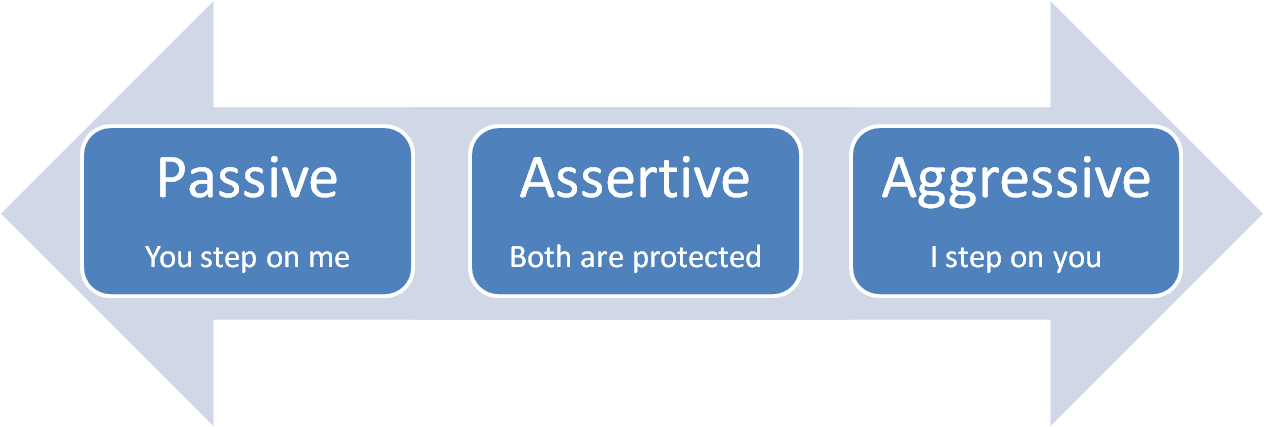
In my Unit 7 Reflection, I learned about my conflict style and found that my dominant style was assertive, though my second one was passive aggressive. I have taken steps to be more assertive in projects by making sure that I am not overpowering or aggressive to my teammates and to make sure that all people win, and that I am a good teammate. 

Wednesday, March 23, 2016

Geologic Timeline Individual Reflection

       Three of the most significant events that have occurred in earths geological history are the "Cambrian explosion:, the Permian extinction, and the Cretaceous extinction. The Cambrian explosion is the time period where a large amount of new species arose, and the diversification of current species rapidly grew. It created a prosperous time for new animals and allowed for a diversification in sea life, which led to the Permian era. Without the Cambrian explosion, much of earths current life would be non existent, and the Permian era sea life growth would never have occurred. The Permian extinction was the largest mass extinction ever, and caused the destruction of 70% of all species. This extinction caused decimated the large amount of aquatic species on earth, and created a niche for the Dinosaurs and other animals to step into. The Permian extinction is thought to be caused by a drastic increase in temperature, which caused many glaciers to melt and allowed for the continents of Pangea to dry up. with this extinction, Earth would still be largely aquatic and have much larger glaciers. The Cretaceous extinction is the third significant event because of its lasting effect on humans and its destruction of the Dinosaurs. Without this extinction, the earth would still be ruled by the Dinosaurs, and humans would hav
e never found and inhabited their niche.

http://www.basfeijen.nl/evolution/pic/cambrianfauna.jpg

     Despite the scale of earths history being so large, what surprised me is how little time humans have been on earth, and how in the grand scale of time, our actions and lives have had a minuscule effect on what has occurred over time. As seen in the Cosmos video, if earths history was a calendar year, we take up the last second of the last day, which truely shows how small we are in the grand scale of things. Despite us having been on earth for such a short time, we have had a large impact on our planet. From global warming to the extinction of many species, we have caused much harm to our earth and have created a lasting impact. With continued increase in temperature, we may be causing our own extinction.

https://spongebobquh.wikispaces.com/file/view/geological_time.jpg/128735281/geological_time.jpg


Wednesday, March 16, 2016

Hunger Games Lab Analysis

  1. In this lab we simulated evolution and natural selection through the process of feeding and reproduction. We had the population split evenly among three different phenotype and had the different groups feed and gain as much cork as possible to simulate feeding. After the birds who gained enough food survived they reproduced and created a second generation which continued the process of feeding and reproduction.
  2. Pinchers were the best phenotype at capturing food because they had the use of there oposable thumbs and were allowed to reproduce the most. Contradictory to these results, knucklers continued to reproduce the most and had the largest population due to sexual selection, in which people were more likely to mate with knucklers rather then pinchers despite the data and phenotypic advantages.
  3. The population evolved from natural selection because of a change in allele frequency. After the first round, the allele frequency changed greatly in that the A gene dropped in percentage while the a gene rose, showing a change that fit the pattern of phenotypes and how they work in the lab. The percentage of A gene started as 52%, while a gene was at 48%. After the first round, the A gene dropped to 31%, while a gene rose to 69%. After this round, the ratio stated constant and the a gene greatly outnumbered the A gene. This shows how the population evolved quickly and that there was a change in allele frequency.
  4. The random events that occurred in this lab were sexual reproduction, the food placement, and the method in which mates were chosen. The non-random events included where people were placed on the line towards the food and phenotype of every bird. These random events had a large effect on the evolution of the population since mating was random and not chosen based upon successful phenotypes, which allowed unsuccessful genotypes to live through sexual reproduction, which slowed evolution of the gene pool. Food placement also affected evolution since individuals closer to food piles survived and gained more food through sheer luck, so natural selection was unable to take place.
  5. If the food was larger or smaller, the results would have been different because the different phenotypes would have to adjust to this change, so the data would change based on which phenotype was best suited. If the food became smaller, chances are that the pinchers would be best adapted due to there maneuverability, while stumpys would adjust to larger foods best. This would change the data, as the Stumpys became endangered with the current food size. This is similar to nature in which natural events change the availability of food, so animals must adapt to new foods, which allows the population and gene pool to evolve.
  6. If there was no incomplete dominance, the results would be different since knuklers would become stumpys with a higher chance of reproducing, so the population would not evolve due to the stumpys continuously living.
  7. Natural selection acts on the phenotypes of individuals, and in turn changes there genotype and decides weather they will survive. This alters the frequency of this genotype in the gene pool, which is evolution, the change of gene frequency in a population.
  8. Some strategies that individuals adopted included mating with exclusively pinchers or by having a very aggressive approach to mating. Pinchers had the best equipped phenotype, so only mating with them increased your chance of survival and created offspring that could survive.This relates to nature, where certain individuals only mate with those who have the best traits for survival rather than sexual reproduction, which change the gene frequency and selectively breeds to evolve the population.
  9. In evolution, populations evolve, and the frequency of alleles changes. Natural selection acts on the phenotypes, but through acting on the phenotype changes the genotypic frequency for the population. 

Saturday, March 5, 2016

Bird Beak Lab Analysis

In part one of our lab, our claim was that "Individuals with better traits leave more offspring". The evidence of this occurrence is that the tweezer and spoon had 22 and 23 chicks respectively (shown on graph), while the scissors only had 14 chicks. This is because the tweezers and spoon were easier to use with the given materials and thus were the better trait, allowing them to leave more offspring.

Another claim of ours was that "Populations begin to look more like winners."The evidence of this occurrence is that the tweezer and spoon had 39% and 37% of the population, while the spoon only had 24% of the population. This is because the tweezers and spoon were the "winners" in terms of the amount of chicks they had and the quality of their traits were better then that of the scissors. This increase in the amount of chicks allows them to have a larger amount of the population and thus, the population reflects them.


In part two of this lab, we asked the question of "If natural selection occurs in a population, how do changes in selective pressures affect the evolution of that species?" Our hypothesis was that if natural selection occurs within a population and selective pressure mainly effects traits that are not suited for it, then only the traits that are suited to survive a certain selective pressure will continue the process of evolution. The scenario assigned to us was that we were only able to use 1/4th of our food source, which made food very scarce and allowed instruments that pick up large amounts at a time to survive. Our claim was correct since the tweezers and spoon were able to intake large quantities at a rapid pace, with a respective 12 and 11 chicks born between the two. On the other hand, the scissors, which take time to gain food, were unable to compensate in either loading capabilities of speed, and thus only had 7 chicks. This result is likely caused by how the traits adapted to the selective pressures, and those that were less suited had a lower chance of survival.

While our hypothesis was supported by the data, there have been errors due to first, the uneven partition of our food supply, and second, the differences in the techniques for using certain beaks. The cause of the uneven food partition was human error, as we partitioned it through the eye test rather than quantitatively partition it, which may have allowed for a wrong amount of food to be used in the test. This could have effected the number of chicks hatched and changed the effect of the selective pressure itself. The cause of the difference in technique was also human error. One example of this was the spoon, which was used by some to push food against a wall and collect it, which was easier that outright collecting food. The effect of this was that the number of chicks hatched for the spoon may have been altered due to an illegal advantage. Some solutions to these problems include using a scale or another type of quantitative measurement and to clarify instructions over the usage of the different beaks.


This lab was done to demonstrate the process of natural selection and two of Darwin's main principles, which are that individuals with better traits leave more offspring, and that populations begin to look more like winners. From this process I learned how different traits survive in a population, which helps me understand the concept of natural selection, where only certain traits are able to survive selective pressures and control the majority of the population. This relates back to the vodcast called "change, its all natural" where we learned about the basics of Darwin's conclusions and to 7th grade science, where we learned the concept of natural selection, but never experienced a life like example of it. based on my experience from this lab, I know how to create an experiment through the use of competition and how to change variables but still keep the same principle concepts.